
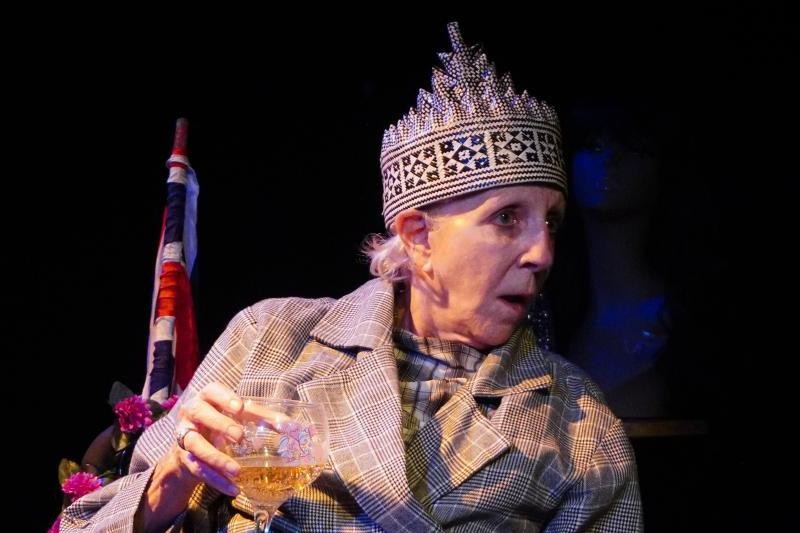
Arnold Wesker wrote this trio of monologues for Nichola McAuliffe, who first performed them in 1981. McAuliffe has updated them for the fringe and an upcoming run at the Finborough Theatre in London. This performance is dedicated to Dolly Parton, and her song, ‘Woman Up and Take It like a Man’ tops, tails, and transitions the plays.
Dolly’s brand of show-not-tell feminism fits perfectly with the lives of these independent but complex women. None of them explicitly mentions the Patriarchy (although there’s a satirical reference to the ‘femisphere’) but all of them are struggling with life and work, with being taken seriously by other people, and all of them value their intelligence or their experience. Wesker has given them the rich inner lives of people, not a man’s romantic (or not) vision of what a woman might be.
McAuliffe has reversed the order of the plays, starting with the youngest and working up chronologically to the oldest; which makes it more harrowing; there’s something poignant but not too depressing about ending with the hope of youth, rather than the losses of old age, but it’s the right choice for an older actor. There’s even a gleam of triumph mixed in with the sadness, as the tiny, fierce Annie Wobbler pushes her worldly goods away in her shopping trolley quietly repeating the street cries that have disappeared from the East End.
Starting with Anna, about to go on a date with her intimidating boyfriend, avoids giving the impression that we might be in Whatever Happened to Baby Jane territory. She’s a bright bubbly blonde, who studied French at what would have been a poly in 1981 and is now a ‘black brick’ university. Her boyfriend is the kind of wine connoisseur show-off that should have died out, but hasn’t.
Annabella is more confusing; a successful novelist, she recalls three incompatible versions of her life story to an unseen journalist. She loves poetry, she writes for money, she’s married, not married, has children, has no children, is an alcoholic, is a keep fit enthusiast, sounds Irish, Scottish and English like a joke about walking into a pub, she’s tough and she’s frightened of everything. The real question she’s trying to answer is, ‘Can I be a writer, is it ok’?
Arnold Wesker was one of our greatest playwrights, but the passion of his characters, the honesty, the sentiment and the openness can feel uncomfortable or embarrassing in a theatre more used to ironic repression. As a consequence, he’s been unfairly neglected. This is a wonderful opportunity to see a rarely (and in this case, magnificently) performed classic.
Annie Wobbler (Revisited) is at Ace Dome at Pleasance Dome until Sun 30 Aug 2026

Comments