
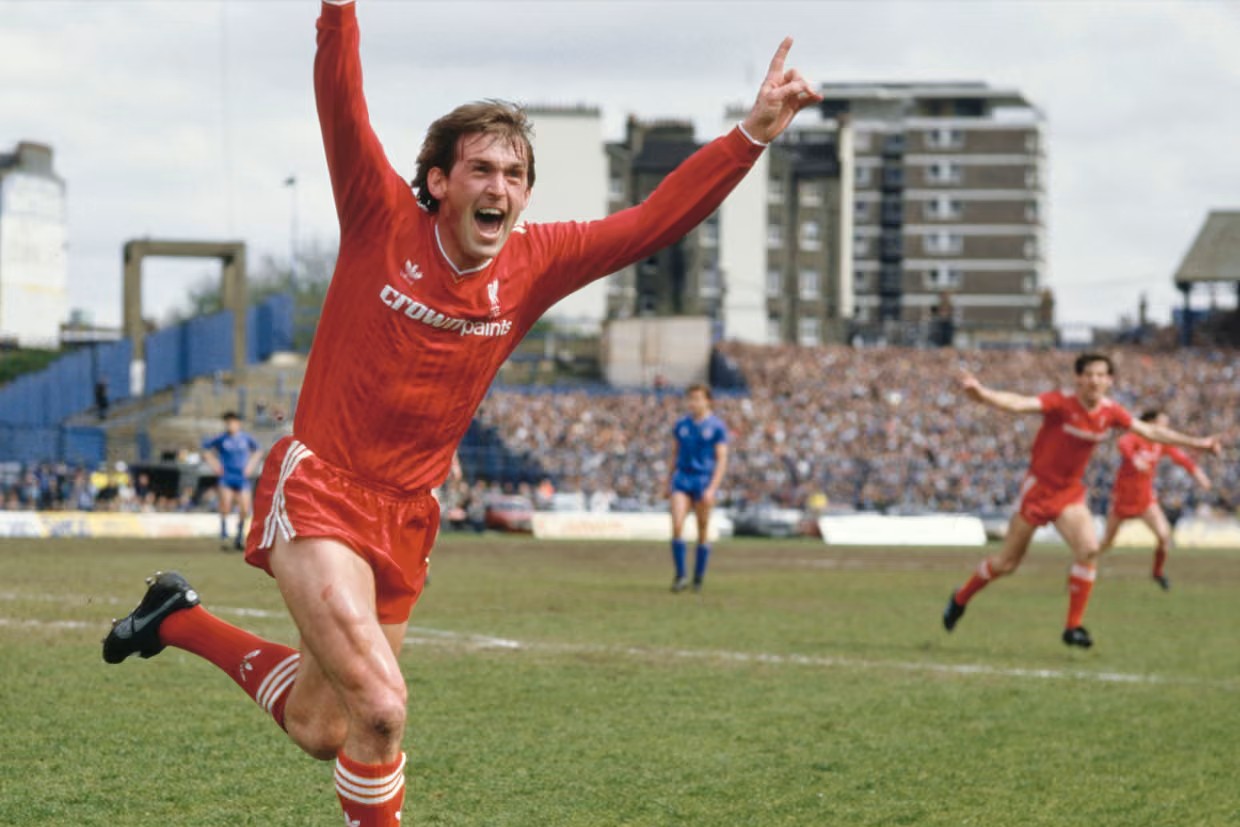
Growing up Scottish but not being of a particularly footballing bent, names like Kenny Daglish, Graeme Souness, and Kevin Keegan were both familiar yet strange sounds that people I’d hear around school. People I knew would utter them with a beguiling reverence or loathing that mystified me, as while they existed as faces in Panini stickers so commonly traded in the playground of my youth, their meaning in the sport was elusive to me. As I’ve moved into middle-age, I’ve made my peace that I’ll never have the deep or introspective love for ‘The Beautiful Game’ that would mean I’d remember and cherish the teams and players in fine detail, but I’ve also come to appreciate the story of a true sportsman, regardless of their craft.
In that vein, Asif Kapadia’s latest documentary, Kenny Dalglish, tells the story of the titular world renowned footballer and manager, and his rise to glory through the latter part of the 20th century. Narrated by Sir Kenny Dalglish himself, his wife Marina, and a succession of colleagues, pundits and associated parties, the documentary charts his path from humble beginnings as a Glasgow school playground footballer, through his years at Celtic FC, and onto his legendary spell with Liverpool.
The documentary is surprisingly enthralling, made up almost entirely from old news footage, home video, and scenes of football games. The opening credits are lovingly painted in the style of those same Panini football sticker albums, although it’s a format that is inconsistently applied throughout the runtime.
Like his previous work with documentaries Senna, and Amy, Kapadia deftly tells a story that never seeks to lionise the man famous for his humble wisdom and lightning-quick play strategies. Dalglish comes across as a simple fellow, kind, warm and good humoured. His loyal-to-a-fault reliability couched in an easy-going charisma that is echoed by the likes of Graeme Souness, Alan Hansen, and poet Jegsy Dodd. What becomes apparent during the first half of the documentary is how utterly integral Dalglish was to Liverpool’s incredible run, both as a goal-scorer but also as a setup-man, with an almost preternatural skill to instantly create openings for other players to net the ball.
The back half of the documentary takes a more sombre and serious turn, as befits his rise in stature to the manager’s dugout, and has to face the tragic disasters of the Heysel Stadium Riot and the Hillsborough Disaster. While the documentary tastefully manages to sidestep any gratuitousness or glorifying, it’s still grim and infuriating viewing, as it makes no bones about the blame falling entirely on the incomprehensible decisions of the police and the following media and political cover-up.
In the end, it’s a fascinating documentary about a life well lived. It is slightly underserved in that the latter years of Dalglish’s career are somewhat brushed over, almost as if the joy of things was sucked out after he tended his resignation with Liverpool. It’s also very much a labour of love, and a tribute rather than any form of objective critique of his life. But considering how generally well liked and affable Dalglish comes across, it’s probably best to simply enjoy the story of a truly decent man who had the good fortune to be one of the best at what he did, at the right time in history.
Available to stream on Amazon Prime Video Now

Comments