
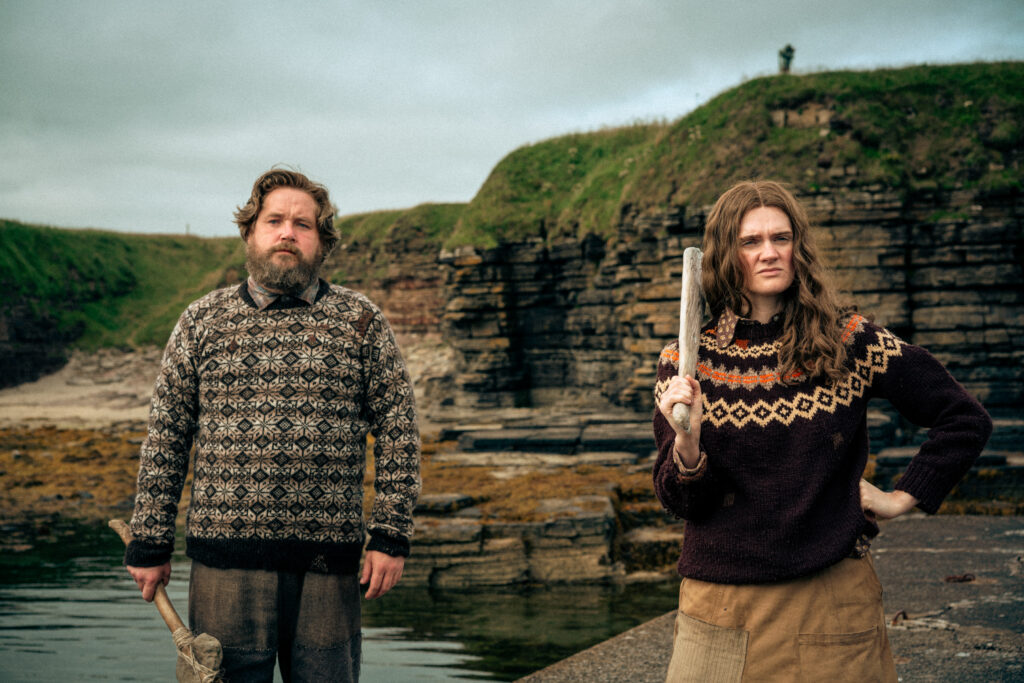
This whimsical comedy is a mixture of toilet humour, sexual inuendo, folk tales, live action and animation, and social commentary, against the backdrop of a deserted Scottish island. There’s something for everyone; almost.
Isla and Sandy have lived alone on the isle of Auk since their parents, the last official residents, died. They’ve grown up eating fish and seabirds, managing emotionally on a diet of sibling bickering and a solid belief in the myths and folk tales their parents left them with, including that above all they must defend the island against the incomer. When that incomer finally arrives in the form of shy and awkward council officer Daniel, coming to evict them, the siblings’ lives are inevitably going to change for ever.
What follows is a wildly veering comedy, alternating between ridiculous nonsense and beautiful scenery, laugh out loud and questionable moments, awfully twee and genuinely poignant scenes, sprinkled with a little violence and some bad taste. The film is both childish and dark, ludicrous and sentimental. Ultimately, writer-director Louis Paxton asks too great a suspension of disbelief from his audience. For a start, Isla and Sandy seem stuck in an era that existed long before either they or their parents would have been born.
This is a shame as the acting is top notch. Domhnall Gleeson is well cast as the good hearted but lacking in confidence Daniel. Gayle Rankin somehow manages to hit all the notes assigned to her, displaying both innocence and bitterness, beauty and grit, silliness and depth. Grant O’Rourke (Outlander) pulls off a difficult role as an idiot who lacks a village. Michelle Gomez never disappoints, and here she’s perfectly pitched as Daniel’s nasty boss; and Emun Elliot surprises as an over-testosteroned wannabe member of the SAS who in reality evicts council tenants for a living.
The direction is professional and it’s clear that Paxton has plenty of talent. The concept is, unfortunately, flawed. It’s hard to get beyond such well used Scottish-film-stereotypes: The premise of an incomer arriving to do away with the residents’ traditional life feels unmistakably influenced by Local Hero; surely, it’s time to move on?
The soundtrack over the end credits is a noticeable mixture of melodic and discordant, perhaps echoing the narrative’s, at times incoherent, elements. The film asks questions about simple isolation versus the rubbish of modern suburban life: which is really better? But in the end seems to settle on community over loneliness. Comedy is always so subjective and there were plenty of laughs in the cinema so no doubt it will hit the mark with some.
Screened as part of Edinburgh International Film Festival

Comments