
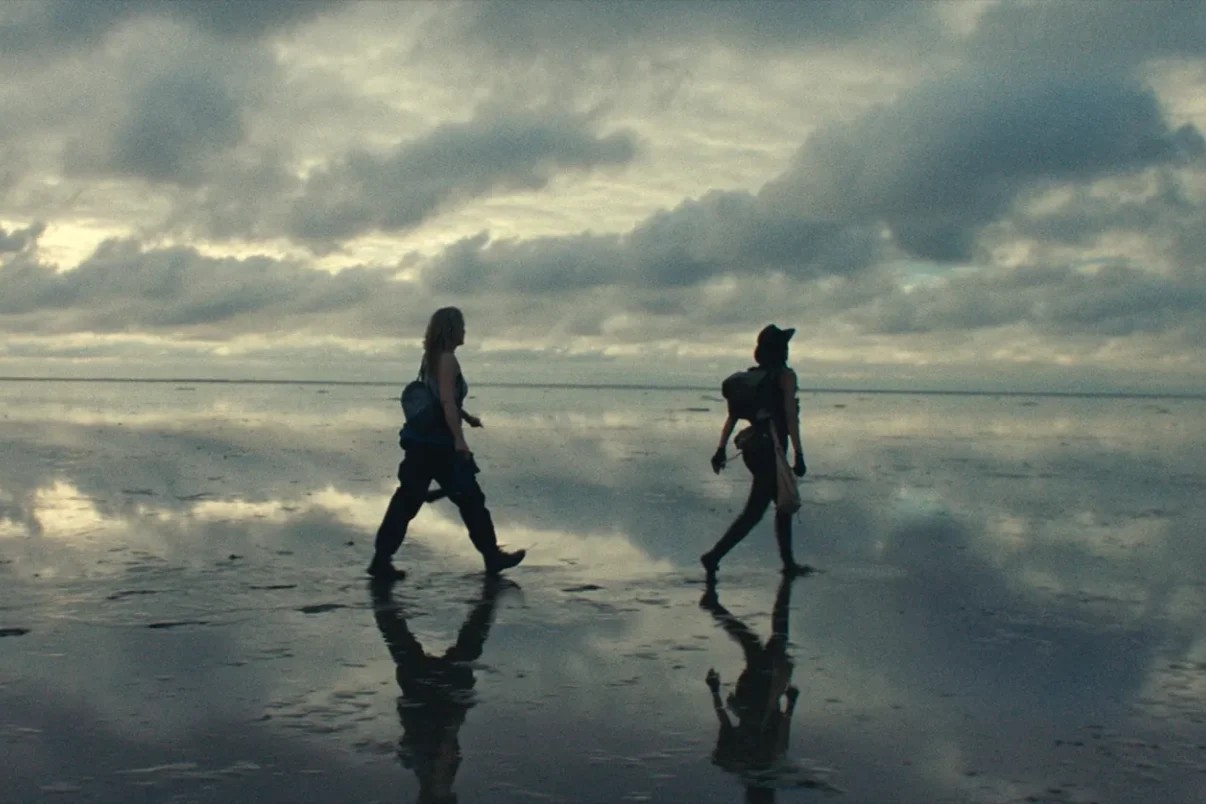
Fenna lives alone, surviving inside an ever creaking and rolling wind turbine which towers above the flood waters within the ‘first zone’ of her what’s left of her country. When an accident means she’s taken against her will to zone 11, her mission is to return home but to do so she must navigate the dangers of each of the other zones.
This Dutch film about sea level rise is less about the whys and wherefores of climate change, more a personal drama set against the backdrop of a now flooded country. It’s a new dystopian society that functions mainly in small tribes; no one can truly be trusted and nowhere is safe from flooding for long.
The locations are impressive, the film crew spent a year recee-ing and developing the script accordingly. They’ve created a unique story world of marshes, rivers, and once dry/ now flooded land out of real places on the North coast of the Netherlands. The characters are constantly wet, even when they’re on dry land they wade in and out of the water almost without noticing. This creates a palpable sense of discomfort in the audience, almost an itch for the protagonists to be completely dry just for a moment. The photography maintains a blue-grey tint throughout which adds to the pervading melancholic atmosphere created from a mixture of despair and the strange beauty of the water, punctured with more fraught moments of danger. The country-style music on the soundtrack helps evoke wild west landscapes
Hadewych Minis plays Fenna well as the archetypal lone cowboy; she trusts no one and says little but knows how to survive. During her journey she meets counterpart Ive (Violet Braeckman), chatty, quirky and bringing with her a sense of unreliability and risk. There’s an immediate sense that this fragile coalition isn’t going to end well.
Unfortunately, the narrative is rather contextless. There’s no explanation for how Fenna has survived in the wind turbine and where she’s getting food from, or how any of the characters are surviving. We never find out why it’s so important for Fenna to be in the first zone and the significance of the other zones also remains a mystery. The overall narrative is cold and oblique and there’s just not enough for the audience to engage with in order to get truly invested in Fenna’s story.
Credit to the film makers for taking on an important and still largely untapped subject in narrative screen fiction; it’s a shame this didn’t leave more of an impression.
Screened as part of Edinburgh International Film Festival

Comments