
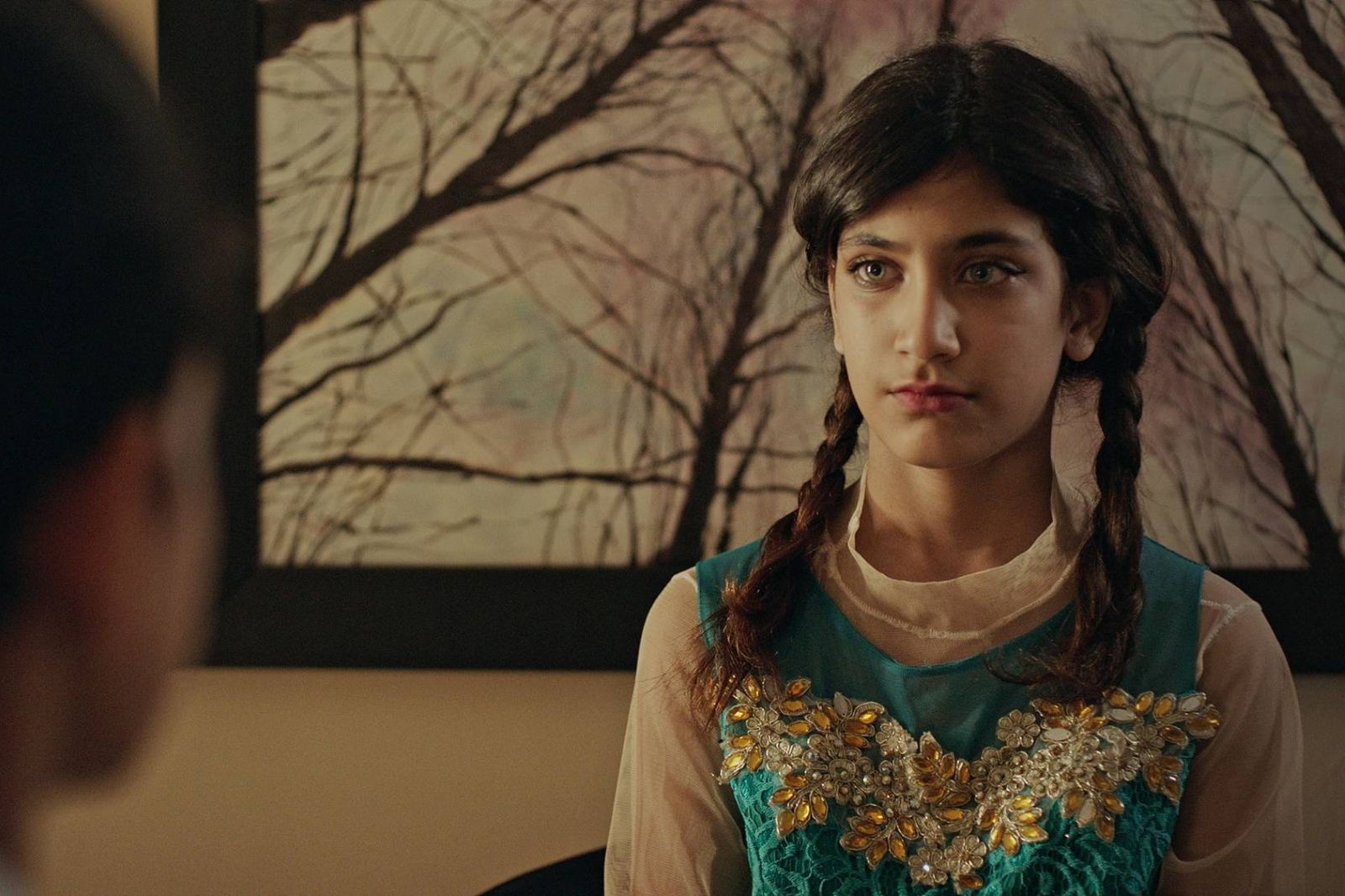
Following his BAFTA Scotland win for Winners (2022), Iranian-Scottish filmmaker Hassan Nazer returns with Without Permission (2025). At the film’s UK premiere during the 2026 Glasgow Film Festival, we spoke with Nazer about Abbas Kiarostami, permission, and the intersections of art and politics.
Your film starts with a quote from Abbas Kiarostami, which really reminds me of his famous Koker Trilogy. What about his films informs you or inspires you?
Basically, my inspiration in cinema is Abbas Kiarostami’s cinema. I don’t know how much you know about the history of my filmmaking, but even my last film was dedicated to him.
I started loving cinema with his work. And every time I make cinema about Iran, his perspective always comes to me. I have to do something to remind the audience about Abbas Kiarostami’s legacy for Iranian cinema.
And of course, because the message I have in the film, it’s political and social issues in Iran, and within the language of cinema, I wanted to have the perspective of Iranian cinema, which is very much admired by a lot of audiences outside of Iran, internationally. I just want to have the theme in my film as well.
What is well known about his cinema is the complex relationship between poetry and reality, fiction and storytelling. What is your own point of view on this?
I was born in 1979, after the Revolution, and Iranian cinema basically changed from before the Revolution to after the Revolution. The Iranian cinema was minus alcohol, sex, and these topics, and then bringing human relations. Which was really important for me, to portray this human relation in my film.
Basically, I have followed the Iranian structure of filmmaking, just to make sure I stay in line with Iranian cinema, because we are talking with Iranian people, we are talking about the issue inside of Iran. And it’s very metaphorical, using cinema language to telling the social issues and political issues and whatever we could as filmmakers. So for me, it was really important to keep hold of this form of Iranian cinema.
In the film, the role of the director is played by a director himself [Behrouz Sebt Rasoul]. Why did you choose him, and does this character embody some aspect of yourself?
That was a huge decision I made. I was supposed to play myself. And I decided at one point I’m not going to play myself because then I cannot direct myself. So I decided to speak to one of the directors who is very much respected and who is in line with my point of view in the cinema, and he very much admires Abbas Kiarostami and many other people which most of these filmmakers got inspired from.
So I brought him into my story because I wanted to give a little bit of space to directors to express themselves. Because the point of the film was about the director’s freedom of speech. And I want to have someone in the real world having it in my film can express himself.
As you might know, most of the dialogue given by him in the film is very much unscripted. It comes from him. And I wanted to make sure we have a freedom of speech from a director who has a limitation for the filmmaking. Even though I had a theme of my film, which a director cannot make his film and he’s trying to get some of the kids’ point of view and create his story. But I have still given freedom of speech to my director, who is actually a real director to support him.
In the opening section, the director says, “My film is not political.” Was that scripted, and how do you personally define that statement? What does political mean in this context?
Most of the dialogue within the car was scripted by myself. And putting a point on that this film is not a political film, because when you are in such a country like Iran, when you’re talking about a political issue, they mark you as a political person. And I have clearly stated from the very beginning of the film, this is not a political film.
And the title of the film actually was, This Is Not a Political Film. And I had to change it to Without Permission. I just didn’t want to put too much point on political things, so I just didn’t want to introduce my film as a political film. And I decided not to put the name as a politically related title.
And it is very important, the issue I was talking in the film: it’s not about the political, it’s about the social issue, it’s about the limitation, it’s about the hopes these young people have. People need to listen to them. And basically, I thought I’m going to make a film as a case study for someone, for the regime, for the government, for whoever wanted to decide something for this young generation, they want to find out what these people are up to.
And I had to select these people from different parts of Iran, from North, East, West, from different ideologies and different ways of thinking. That was very important for me.
The editing in this film is also interesting: the story has three strands: the making of the film, the tapes, and the divorce and separation process. How did you balance that in your editing process?
This film is divided into two different parts. One part is unscripted and one part is scripted. The scripted part came after the unscripted shooting. So we basically shot the film by the interview we had from the kids. And we created a very friendly environment for the kids, just to make sure the kids can give us as much information as they are willing to give. Even though we had the parents next to us, the parents weren’t in the shooting area. They were watching it live from a different room, just to make sure we had permission from the parents to ask such questions.
And we were finding out that these kids had given us so much. Their point of view is really important. We had, you might notice, a girl with a scarf, and she was very spiritual and very religious. And we had the parents, both father and mother, completely opposite. And you’re finding out where these people are learning these things from, somebody teaching them. And then taking their point of views was really important.
So I created the environment to get information from these kids. And then I gave two days off in between our shooting. I wrote the scripted part. The connection with the scripted and unscripted, it only happened within two days. And then based on what they’d given, I wrote it. I found out this subject is an important part of this conversation, and then I started making a point on the scripted side. And of course, there are parallels going forward.
And the way we were editing was really important as well, how to introduce that, because you could make a very boring film. When you’re making a docudrama, it’s very dangerous because you’re standing in between. Your film could be very much like a documentary style or very much like a feature drama. And you need to make sure you’re satisfying everybody who’s coming to watch your film as a docudrama, respecting the drama side and the documentary side. So I came up with an idea how to edit this, and we put a lot of thought on that. Basically our shooting altogether took seven days, but the editing of this film took us a couple of months.
In the film, the director often begins by asking the children about the meaning of their names. Why was that important?
This is a very important question. Iran has a history of 6000 years of civilization, and most of these names represent something. You might notice it’s really hard for the subtitle to completely give the meaning of the name. We wanted to find out from the very beginning what their name represented in their life.
If somebody’s name is very religious, we want to point it out, we want to find out, is he religious or not? If somebody has a very historical name, we want to find out, is he very nationalist and on the historical side as well? And what was very important for us was to know the name, because this name in Iran is really important. It represents part of the society.
For example, my name is Hassan. Hassan is a very religious name, and we want to find out, is this Hassan given to him because the family is coming from the background of religious? That was very important for us. If we know his name is Hassan and we’re coming back from the religious part, we will have a different kind of question. We should not have the inline question because that would be very easy for him to answer. So we want to have it difficult for them to answer and to get this authenticity coming from, coming from, I would say, non-actors, people who were never given a script, to remember something, to think about something and just given right at the moment.
So this name was very important for us to know their names, but we want to find out their background, where they’re coming from, where their family are, what’s their ideology in the life, given this kind of name. For example, myself, my name is Hassan, which is very religious, and my son’s name, his name is Oscar, which is completely different, and is related to my work because I’m very selfish. I want to give an Oscar name to get an Oscar.
Why did you decide that the film inside this film should be a love story?
I used the film language to give messages. And I think making a film to make it more interesting for the audience to listen, to listen about the message about the film. And film, I think it’s a good way of filmmaking, especially when you’re making fiction drama, if you show something from behind the scene and something from in front of the film, it’s important.
This is a trick. When you want to sell something, you need to design it really well. So this is a design from a director of the project. Making a film in the film.
How did you choose the children who perform those scenes?
We had to audition in quite different parts of Iran, because we wanted to make sure we have from different society, and to make sure not all of them were from one part of society. So we had to go everywhere in Iran. It took about a couple of weeks to choose these kids.
We had a little bit of an interview with them, not about the subject of the film, just about how they would like to be actors. We were talking, and they were given a little part of their life story. And we wanted to find out how they are able to speak, how independent they are. There are different criteria what we were looking for.
Can they be an independent person to talk? That was very important for us because we wanted to have the message from an independent kid, rather than like a parents given something to feed.
Was Abbas Kiarostami’s work with children also an inspiration here?
Yes, absolutely. And that was a continuation of my last work. When you work with the kids, kids give something which nobody else can give.
When you do rehearsal, you never manage to get the reality. So if you don’t do, most of these kids give their performance right at the moment, they don’t have to repeat. And on this occasion, because it was an interview for the very first time, even in my previous film, most of these kids’ first shot was the best shot. They never managed to repeat themselves.
In light of the current situation in Iran, is there anything you want to add?
Actually, I had an interview yesterday in BBC Scotland. I want to say one thing:
At the moment when I’m talking to you, I’m happy about talking about the film, but I’m very angry deep down because the situation happened with the kids in Iran and the school kids were bombed, and I was auditioning people not far away from that school. I was auditioning the same kids, not far away from that school.
And this is really important. This war is happening in Iran is a no-planned war. There’s no planned war. No need this is happening. And I want to say one thing. They will never manage to change the regime in Iran. The Iranian regime has to be changed by the people of Iran.
The power in Iran is not based on an individual. The regime structure is divided power. If you kill a leader, if you kill anyone, they are going to be replaced within an hour. Nothing is going to happen. These people are doing a big mistake. They kill the leader. Sometimes martyrdom is much stronger than being heroism. So you can’t kill someone and expect to do whatever you want.
Basically, you need to let people decide for themselves. If the people are ready, they will do it. If they’re not ready, my job as a filmmaker, it’s to fight and having a hope to fight for internal policy. Interfering of outsiders is the biggest mistake.
As an independent filmmaker, you financed your first feature yourself, what advice would you give?
Becoming an independent filmmaker is very hard. Of course you need to have the money to back up your idea and everything, so I’ve worked hard to save money to be an independent filmmaker. Because I had a message which I wanted to give to the world, I was following my dream.
And I wanted just to follow other people’s hope and I make a story which is important for me. And my advice is: just have a hope, make a film. The hope is the key of moving forward. It doesn’t matter if it’s about filmmaking, is about the change to the politic, change to the society system, change to everything is the hope, follow your dream.
Permission and consent clearly mean different things in the film. What are your thoughts on that?
Of course, giving permission in Iran is very difficult, so you need to follow a lot of rules. For me, when I got the answer no for the film I wanted to make in Iran, that motivated me to make this film, Without Permission. Always you need to take advantage of your situation.
When something happened to you, there’s another idea that will be born. So if the Iranian government would give me permission for the film I really wanted to make in Iran, this film would not be made. Basically I took advantage of it because they didn’t give me permission. I came up with a different idea.
The creativity is the key as well, to go over everything. Especially as a filmmaker, having creativity is very important.
Without Permission screened as part of Glasgow Film Festival
Comments