
Salomé is Oscar Wilde’s most notorious play, fusing biblical characters with blasphemous decadence and violent desire. It was banned in Britain but in 1918, dancer Maud Allan starred in a private performance which became entangled in an equally infamous scandal. From this episode playwright Lily Zhang builds an interesting and thought-provoking character study, focused mainly on Robbie Ross – Wilde’s one-time lover, literary executor, and foremost champion of his work at a time when the public reviled his very name.
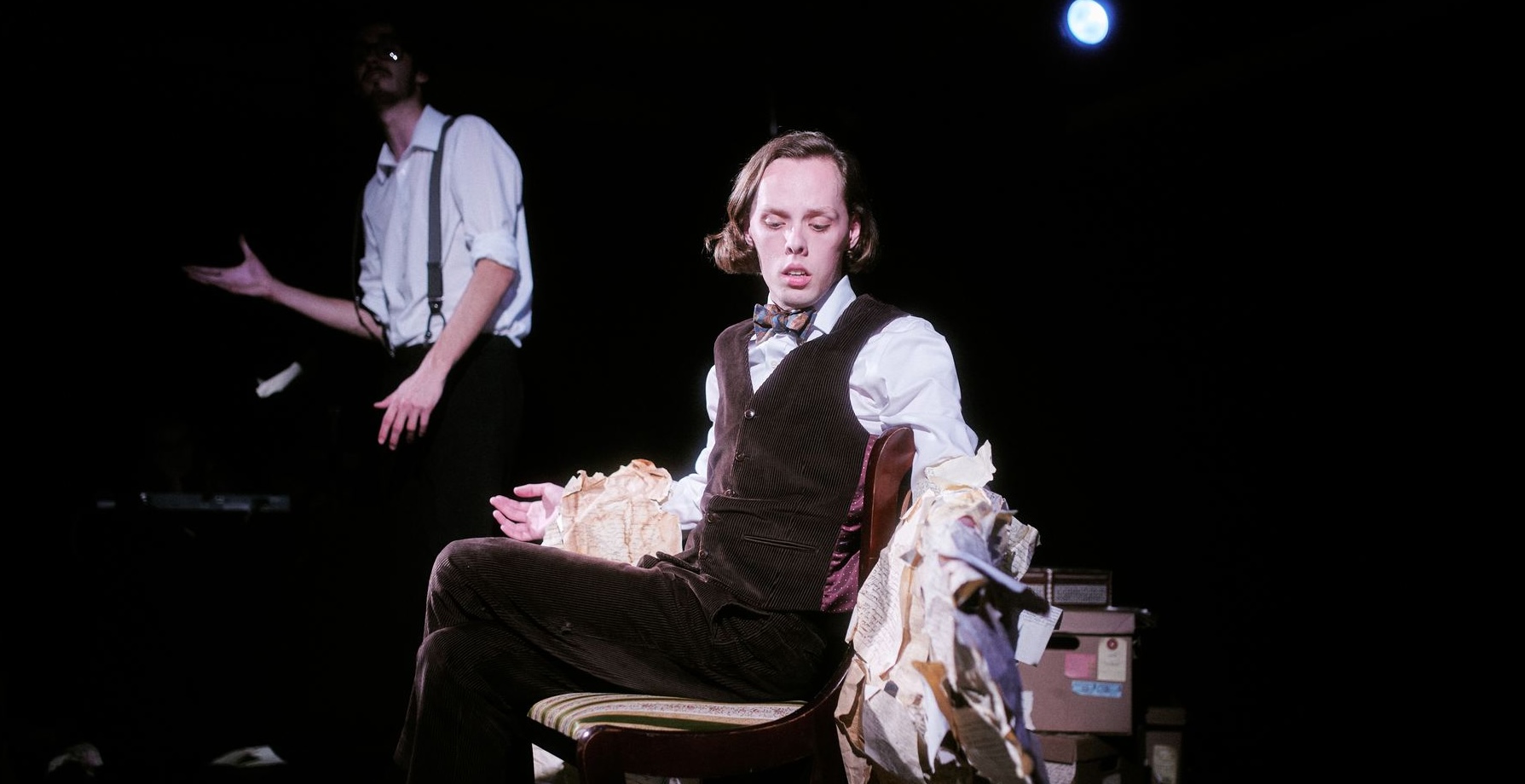
Peregrine Neger brings a satisfyingly Wildean quality to his role as Robbie – amusingly foppish and mildly superior, but likeable all the same. At the heart of the story, though, is Ross’s intellectual self-sacrifice: he dedicated his life not to his own writing, but to the rehabilitation of another man. As the play proceeds Robbie becomes increasingly erratic, reflecting his own fear of legal persecution and his passionate defence of Wilde. Some well-judged comic notes puncture any sense of pomposity and reveal the hidden vulnerability the relationship has left behind.
For the difficult truth is that Wilde – almost certainly historically, and definitively in the world of this play – seduced Robbie when he was just 17, and Wilde was a much older man. The accusatory counter-narrative is provided here by Bosie, the lover who sparked Wilde’s infamous libel trial and later turned against him, played with disdainful malevolence by Ren Stefanacci. He’s here to deliver a brutal riposte to those who vilify him while turning a blind eye to Wilde’s own excesses. And however dislikeable he might be, both historically and in this play, his description of Wilde’s “ruinous orbit” is a telling and thought-provoking critique.
But none of this really has much to do with Salomé. If there’s a flaw in the script, it’s that it tries to do too much for a one-act play: there’s an intersecting strand about Maud Allan’s defence of her own reputation, which is slightly eclipsed by the clash between Robbie and Bosie. The fact that Robbie refused to testify in support of Allan is central to the framing story but his complex motivations are addressed too quickly to fully unify the narratives. And an image of putting Salomé herself on trial could be an intriguing centrepiece, but doesn’t have the room here to fully emerge.
A crumpled mess of documents, joined together with sticky tape, proves a versatile prop and impactful motif: characters refer to them to signal they’re quoting verbatim, and in one memorable scene they smother Robbie as Oscar’s legacy supplants his own identity. The visuals, in fact, are crisp and revealing throughout, albeit that one crucifixion image is a little on-the-nose. In the end, my main wish for 1918 is that it had the time to dig deeper… and perhaps, one day post-Fringe, it will.

Comments