
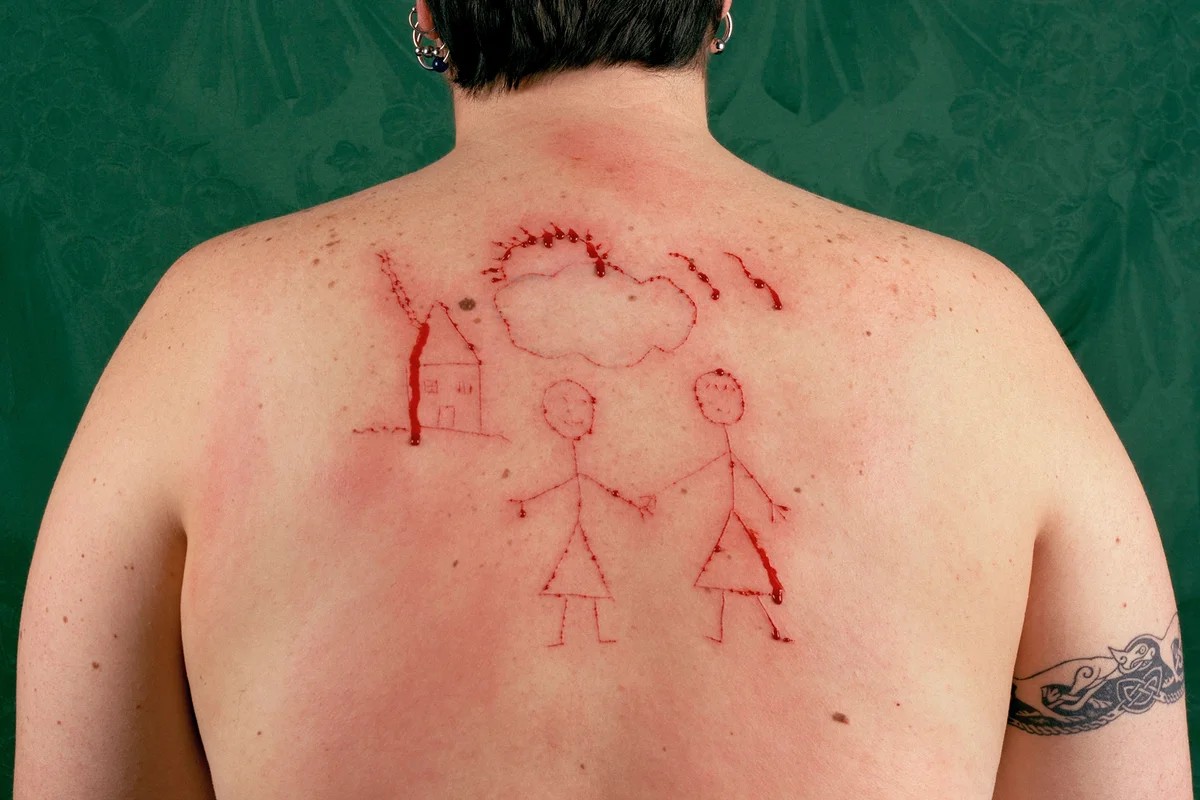
There are probably few minds that need changing in the Edinburgh Book Festival’s Spiegeltent on the lived experiences of LGBTQIA+ identities. But the stories of the communities they represent in their work and books, To Be Seen by Catherine Opie, Love Bites by Del LaGrace Volcano and Queer Art (Art Essentials) by Gemma Rolls-Bentley, reach far beyond the expected audience.
Created by master craftspeople, these tents have travelled the world hosting ground-breaking performers such as Marlene Dietrich and Edith Piaf in early 20th century Europe. Today is no different. The tent buzzes as radical photographer, artist and activist Del says hello to friends waiting in the audience, soon to be joined on stage by fellow radical photographer and educator Cathy (she baulks at Catherine) and Gemma Rolls-Bentley, curator and writer, who has for two decades championed diversity in contemporary art.
Americans Opie and Del are veterans at documenting queer, trans, and alternative subcultures. All are pioneers and have an intensely loyal following.
To see and be seen is the thread that bonds each of the artists’ and writer’s exploration of what it means to be part of the LGBTQIA+ community and be othered and or silenced; not just in society, but also within ones’ own community. Perhaps this quote from an audience member is the best quote of the day, ‘Who put hetero in front of sexual? Aren’t we just sexual?’
Volcano also makes an interesting and amusing point that in their photography archives they have put hetero in front of anyone who doesn’t identify as part of the their communities. This, they suggest, is political, a way of othering what is considered to be the ‘norm’. The body is political. It’s in their archives. It’s in future projects. It’s in the work shown on screens around the tent.
As Cathy states, past is prelude, and she argues that these are more dangerous times than ever before. Rights are under siege. She shares her concerns that under the current US administration identities and lives are violently challenged on a daily basis, forcing home that we all have a human right to exist and be seen!
Del adds that they emigrated to Sweden and that many American LGBTQIA+ communities are leaving the US in fear for their safety and their human rights under the current administration. Cathy asserts that the very fabric of democratic due process is under threat in America, as are marginalised communities, democratic institutions, and the environment.
Gemma also gives a fascinating insight into Queer Art (Art Essentials) which gives an overview of LGBTQIA+ art from the nineteenth century to the present day. A long overdue, and vital, addition to the oeuvre as Gemma intimates. The book focuses on lived experience, resilience, and marginal perspectives as opposed to the often over eroticised images of queerness. A fascinating and necessary discourse. There’s gossip of course. There’s always gossip.
The three panellists take end questions from the audience and we’re left with one essential thought. Who did put hetero in sexual?
‘Radical Imagery‘ was part of Edinburgh International Book Festival

Comments