
Grief will touch us all. So it has always been. Writers and filmmakers alike have explored this sentiment since the mediums began. Philippa Lawthorpe’s latest film, H is for Hawk, adapts historian Helen MacDonald’s deeply personal memoir of the same name; charting her collapse into obsession over training a goshawk after her famed photographer father’s sudden death.
It follows the events of MacDonald’s life, as played by a nervous and introverted Claire Foy, as she begins to ever-more obsessively pour her energy and focus into the rearing and training of this “Hannibal Lecter of the bird world,” much to the chagrin of her friends and family. This amidst occasional flashbacks to time spent with her late father, portrayed with an almost impossibly sweet charm by Brendan Gleeson.
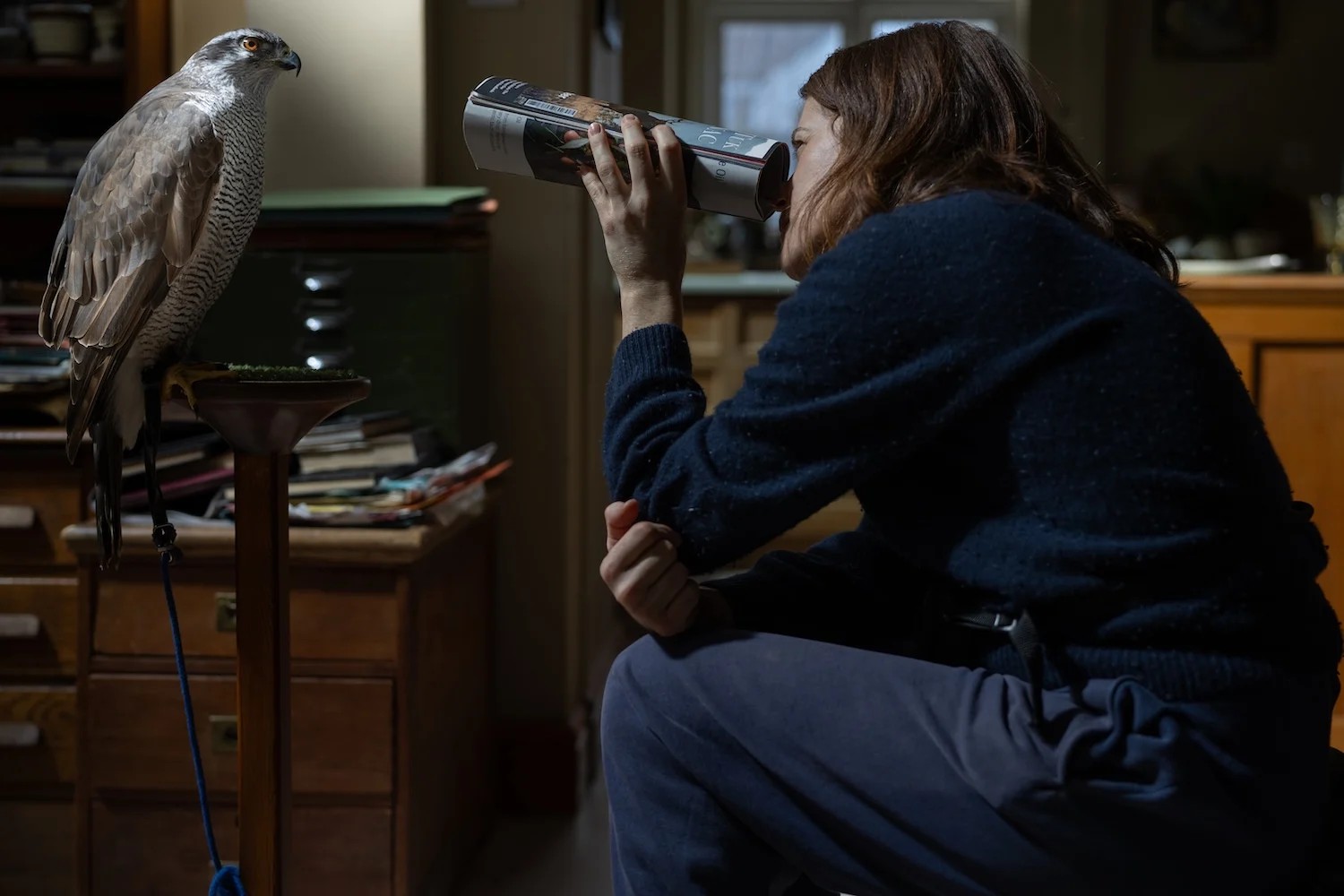
In some ways, the film is a masterclass of subtle nuance and facial performance, relishing in Foy’s every eye-twitch and hint of a smile as the actress performs beside a real goshawk, which has clearly not a care in the world for the film that it is supposed to be in. Mabel the goshawk spends most of her scenes idly coughing up pellets and crapping on the floor, or continually trying to fly away from Foy’s gloved arm in fits and starts. As a result, the film’s content is often improvised and tailored to the bird’s antics rather than to a set tale, and unfortunately it suffers as a result. On the other hand, the photography of the bird itself is one of the film’s highlights, although the significant amount of credited rotoscoping and visual effects artists would suggest that some of it wasn’t entirely caught live.
The original book was equal parts an exploration of Helen’s grief and passage through it, it was also a parallelled biography of the writer TH White, whose own struggles in life were offset with a similar decision and writings on his struggles to train a goshawk. This aspect, and indeed almost all the poetic narration and musings from the book are completely absent from the film, which instead focuses on a close study of MacDonald.
All credit to Foy for her performance, her clear fear and apprehension of the large raptor, it’s cruel beak and claws often only inches from her face, onto her casual ease with it later on. As well as the believable portrayal of a chaotically ADHD-suffering academic who seems utterly incapable of behaving in ways that amount to self-care, cleanliness or focusing on her work, or writing her father’s eulogy.
It’s certainly not a bad film. But at times it is rather a plodding and repetitive experience. Indeed, there are moments where the audience starts to wonder why Denise Gough, as her long-suffering antipodean bestie Christina even bothers coming round to visit, as Helen fails to answer the door, return messages or calls, and seems ambivalent to all else in her crumbling life.
The result is a film which paints an interesting portrait of grief, and finding connection through misplaced emotional attachment, but then sort of just stops, after several acts of watching MacDonald and Mabel’s antics, the last act remembers this is a film and pulls out a few impassioned speeches and a somewhat rushed finale. True, life isn’t always that much like storytelling, but it feels like there’s a lot missing from this film, which perhaps is why the book wasn’t simply MacDonald’s tale. That said, it’s definitely one to ponder, especially if you enjoy ornithology, or have a passion for watching people slide through periods of maudlin depressive fixation.
In cinemas nationwide now

Comments