
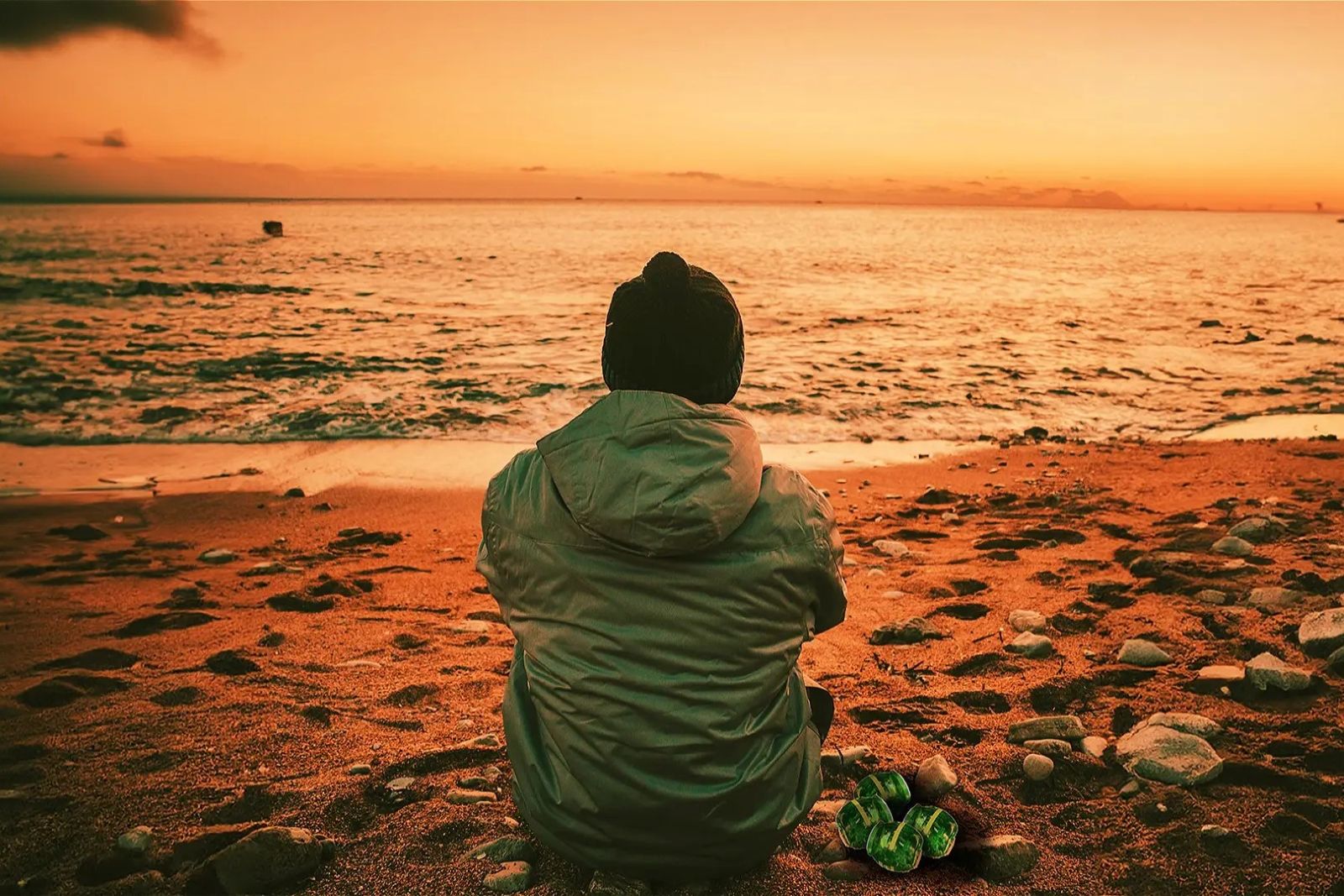
A group of teenagers are celebrating the end of their exams on a beach, getting drunk and dancing. Shortly afterwards the same teenagers are in therapy discussing survivors guilt. As the play continues it switches between the beach, the therapy session, an interrogation, a confession, and the circumstances leading up to a tragedy.
Each of the characters has to wrestle with guilt. Not just the suspicion that they did something that caused the tragedy, but the accusation that they don’t care about it because it happened to someone on the margins. A homeless person they used to know has died. A chorus of scowling adults speak his words while the teenagers squabble with each other about privilege and punishment.
The play was written by Naomi Denny in collaboration with the actors that make up Hungry Wolf Youth Theatre. The large cast and the short running time give it a soap opera feel which belies the quality of the writing and acting. Big moments have to be thrown away because there are too many to pack into one show, and the ending seems glib after some of the revelations, but the characters have real depth and soul.
What could have been a problem play about homelessness or bullying becomes more about the anxiety of growing-up and getting-on. They all have something beyond their control that holds them back, and most of them are looking for some guide to behaviour that could make things better, whether that’s politics or religion, saving the environment or self-improvement. Some of their lives have already been blighted, and some show hints of future catastrophe. Will India lose her sparkle by drinking too much? Will Luca emerge from his PPE course a career politician who only cares about optics? Will Michaela push herself too hard?
Another possibility is that they will spend most of their adult lives looking at a screen. The party on the beach is nearly a non-starter because their phones are pinging. Drinking and dancing have to compete with doomscrolling and family emergencies in the group chat. Previous generations had to rebel against their parents, this generation has to rebel against their own devices. Their decision to focus on the moment rather than taking selfies to post on their socials is strangely sad, rather than leading to more fun, it seems to be covering up a fear of not being good enough. Life is precarious, and they’re not sure why.
It would be hard not to wish them well.
When The Tide Comes In has finished its run

Comments