
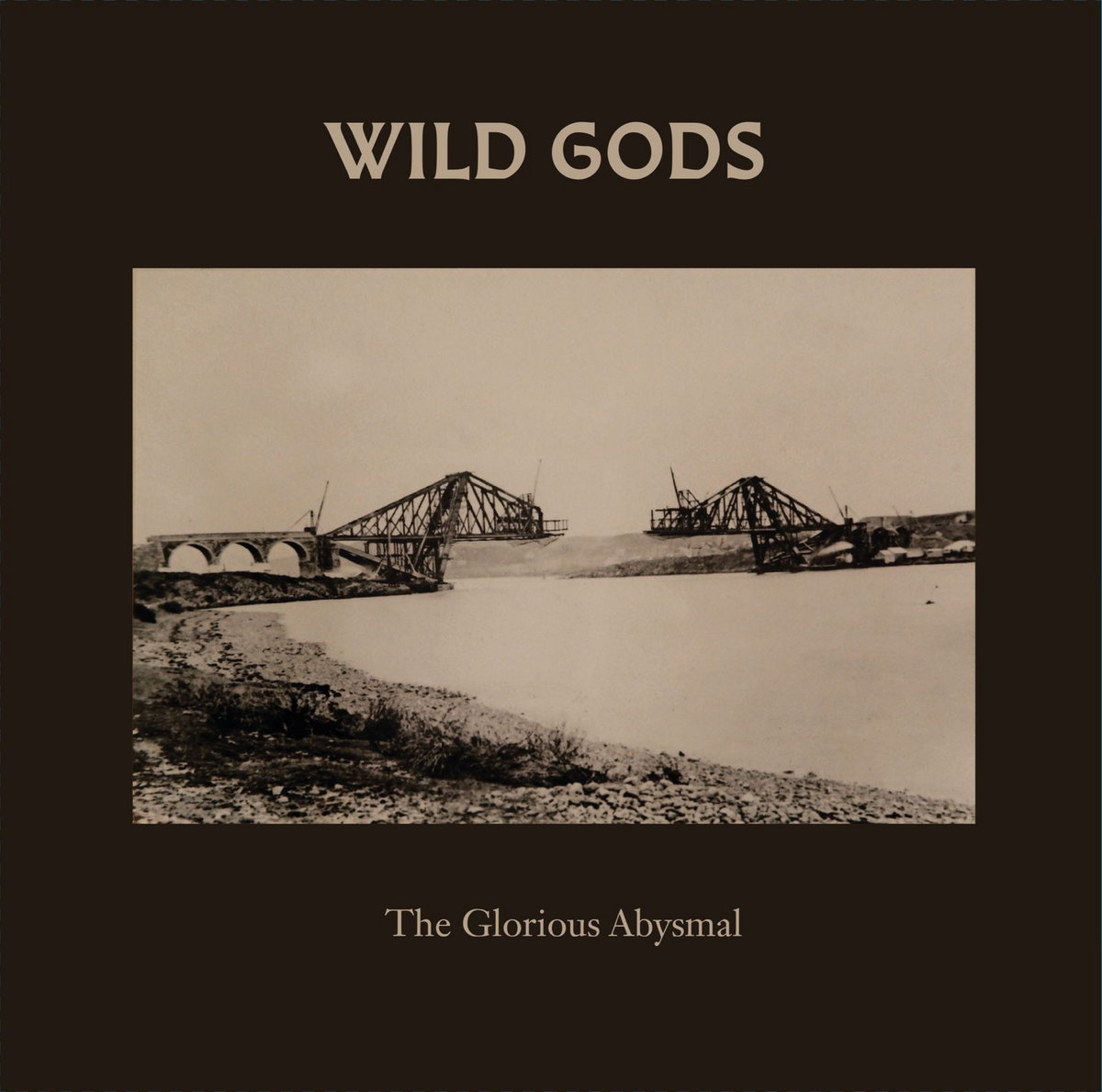
Wild Gods is a project led by Jamie Livingstone, and this album features collaborations with Susannah Stark (vocals) and Càit O’Neill (fiddle), mining the same traditional drone space that Lankum have brought to the mainstream recently. There are myriad influences: ayahuasca trips, Glasgow-based community organisation, Vox Liminis, and the elements of Hebridean communities that feel like relics of a bygone age. But The Glorious Abysmal is an exercise in magnitudes; of space, time; of cycles of life and how a world relentlessly on the move has barely moved at all.
The structure emphasises a cyclical worldview: seven songs, an intro and outro, two interludes, two lengthy meditations and a centrepiece that knits together all the disparate pieces that form the rest of the album. ‘Keening’ does what you’d expect, as disembodied voices and ghastly pipes boot up before ‘Carlene’s Pin’ is more than nine minutes of elemental guitar figures and caustic bagpipes, Stark’s voice at its evocative best.
‘Cainntearachd’ and ‘Ortha’ don’t offer much more than half minute palette cleansers, but their names further the cinematic world-building of the album, referring in Gaelic to an ancient piping teaching method and prayer. Between them we have ‘Rest & Be Thankful’, the wonderfully named viewpoint on the road to Oban that’s almost always closed. The old samples are in conversation with the recent Boards of Canada album, just maybe a century and an ocean apart. O’Neill’s mournful fiddle recalls a melancholy love and the album’s only substantial percussion drives the song to a roaring crescendo.
‘Hilda of Klint’, named for the pioneering abstract artist, is a tense nine minutes of slow-burning minimalism. The fiddle and guitar run in concentric circles, only flanked by distant vocals that do little to tether this composition to anything tangible. ‘Aye Right’ feels like another interlude until the ghostly chorales and incongruous electronics arrive to whisk us into an uncertain future.
The Glorious Abysmal is a glorious void, giving the space on wax that one might find in Scotland’s sparse hinterlands. A beautiful and eerie examination of redemption, hope and love in a world that might be fading, but can never disappear.

Comments