
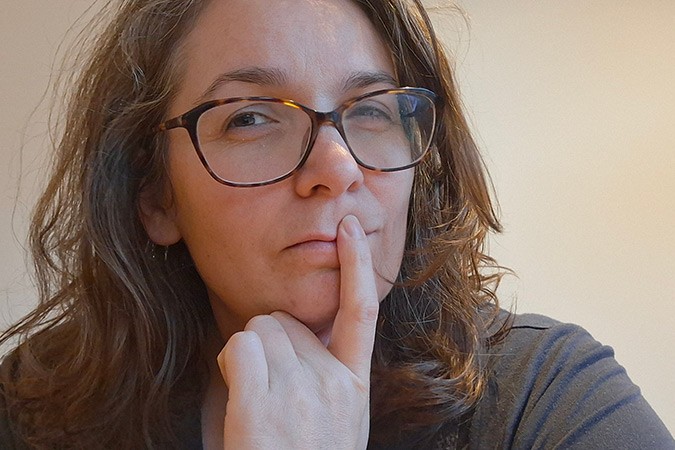
Dr Edel Mc Glanaghy is a comedian and clinical pyschologist who is bringing her latest show ‘Stand Up Therapy’ to the Glasgow Comedy Festival. We spoke to Edel about the show, her career, and how she combines the two fields.
Can you tell us about ‘Stand-up Therapy?’
‘Stand up Therapy’ is my Glasgow International Comedy Festival show, where I talk all about me!! As a clinical psychologist my job is mostly about other people and their stories, and my previous shows were about specific topics (PTSD and the downsides to therapy), but this show is about my journey, from an emo teen, to psychologist, and now performer and writer. As an Irish woman I naturally laugh at the heavy stuff in life, and as I learnt more about comedy and developed as a therapist I realised comedy and therapy have a lot in common. They’re both about connecting with folk, being open and, ultimately, feeling better. Looking back I’m impressed with my own audacity to decide I was the kind of person who could help others, and this show explores that.
Can you tell us about your work into PTSD and how it manifests? It feels like it’s become used as a slightly flippant, catch-all term for any kind of trauma recently.
Oh, PTSD, it is one of the most fascinating conditions, partly because of how it manifests, and partly because of how we treat it. Psychological trauma is common. We know traumatic and difficult and dangerous things happen to humans a lot, sadly it’s part of life. Not everybody, though, develops PTSD; in fact most people don’t. Most people, with support, adapt and recover from the initial impact, and over time can make sense of the events and move on.
PTSD occurs when the memory processing of the event is interrupted and it gets stuck. This can happen for numerous reasons, some related to the person, the event, the aftermath, most of which are out of the control of the person. An unprocessed memory, when triggered by a reminder in the here and now, can take the brain back in time to the event, feeling like it’s happening again. That’s what’s unique about PTSD, not just remembering, but it’s a re-experiencing, like you’re in it again.
Triggers can be anything that relates to the trauma memory and brains are super creative, and crude, at finding possible reminders. And unhelpfully scan constantly, Robocop style, for reminders to be triggered by.
It can feel brutal, but can be treated successfully too! It’s one area that TV and movie genres depict well. Stranger Things Season 5 was a prime example of how memories work, the connections between them, and how old PTSD memories can be powerful and impact our sense of self. Vecna though clearly was not in the right mindset for therapy! Trauma memory reprocessing aims to revisit the memories and bring a more balanced perspective, so they can become past tense old memories, and stop interrupting the here and now.
What first interested you about psychology as a field of study, and what made you decide to focus on it as a career?
I’m curious about people. When I was a kid, me and my Dad used to sit and watch people walking past the car and try to guess their stories, what kind of life they’d had and what they were up to that day. Studying psychology gave me a framework to understand lives different to my own and clinical training gave me the tools to help folk make changes.
Mental health is, I think, at the crux of how to live a full life. I suppose physical health is a bit important too, because if you’re dead, you can’t have good mental health. Or can you..?
When you began performing stand-up, did you bring material about your profession on stage straight away, or was there a later Eureka moment?
I actually only started comedy because of my profession. When I was studying to be a clinical psychologist, I took part in Bright Club, which is a fabulous thing. It’s where academics and PhD students (nerds basically) use comedy to talk about their research. So I did that and absolutely adored being on stage, having people listen to me talk about nerdy things and actually smiling while listening. I also found that there was less resistance to heavy topics when delivered with comedy, and since then I’ve been keen to use comedy as a vehicle to get practical and evidence based information out to folk who might not otherwise seek it.
Some audience members left your previous show, ‘Trauma + Time (-PTSD)’ with not just an understanding of the condition, but a recognition that they may require some treatment themselves. Has this been a common occurrence, and how does it feel knowing you may have helped some people on the first step to dealing with their issues?
True, every performance ‘Trauma, plus time, minus PTSD’ has led to at least one person in the audience (that I’m aware of) realizing they have PTSD or need to go to therapy. Venue staff too!
Perhaps it’s not great for NHS waiting lists, that I’m drumming up demand even more, but I do believe that sharing solid and clear information about mental health is important. So many folk can struggle for decades with PTSD, not realising what it is, and that it can be treated.
I suppose I’m on a mission, to highlight the specifics of mental health conditions and explain the therapies available to help folk understand and make decisions for themselves. I don’t agree that everybody everywhere needs therapy for everything or that every traumatic event needs to be processed in therapy. And maybe, just maybe, that’s why I don’t have a huge following on Instagram!
In ‘Stand Up Therapy’ you intend to show how therapists can be messed up too. How has stand-up helped you with your own mental health?
Yeah, therapists are weird. Amazing, but weird to choose a job to hear everyone else’s worst stuff! Stand-up comedy has been so good for my mental health. It makes me reflect on things and see them from other perspectives. Like toast, trying to write a joke about toast, it’s another way to use my brain that’s not about trauma or depression or the hard stuff. Comedy is playful.
Genuinely though, taking this light approach was invaluable when I was dealing with a health issue a few years back. Instead of spiralling with worry, I spent my time crafting jokes about the absurdity of my situation. This allowed me to acknowledge the situation and be present while also holding it lightly.
Getting up on stage also boosts my confidence (my audiences are the loveliest!), but it has ruined my ability to deliver straight-face training, because now, when I deliver trauma training to professionals, I need to remind myself that the serious faces and lack of laughter is not a sign that I’m bombing!
When you’re watching other comedians, do you secretly diagnose them from the audience, and what would the most common condition be?
When the general population meet a psychologist they always say, ‘Oh, are you analyzing me?’ and honestly, we’re not! We need far too much background info to do a basic formulation.
But with performers, well, yeah. I’m judging, but not what they say they have, but whether they’re dealing with it. So for example, jokes about anxiety can be very different from a comedian who is clearly using CBT strategies, compared with one clearly in fight or flight mode on stage.
Same with comedy about trauma, the audience can feel if it’s in the past, or raw and unprocessed. I’m actually mentoring comedians writing about trauma for that reason, to keep it psychologically safe for themselves and the audiences.
At Edinburgh Fringe last year, I took part in a comedy panel show, ‘Shrink Wrapped’ and got to analyze comedians live on stage. It was so fun, but it was hard work too. As you’d expect, most were not up for being vulnerable and were much more experienced at deflecting on stage than I was prepared for. But I’ll be ready for them this Fringe, so can report back on their issues then!
You’re also writing a book about the lighter side of PTSD therapy. How is that going?
Oh, thanks for asking. My book is in its final draft stages and is in the hands of prospective agents. If traditional publishing doesn’t work out, I plan to self publish later this year. It’s a tongue in cheek guide of how to get PTSD, how to cope with it, and how to get rid of it. It’s not a typical self help book, there’s a lot of swearing, absurd analogies, and pop culture references. It might be genius, it might be complete nonsense, but my beta readers agree it’s a fun informative read!
Are there any other shows at GICF that we should check out this year?
Oh, I think if you have any interest in Scottish comedy, you gotta check out where it all begins with Viv Gee. She’s a legend in the circuit who has trained so many acts you will know! I’m also intrigued by Amanda Hursey’s WIP ‘Death of a Saleswoman‘, and Sean Chalmers ‘Don’t Leave me Hanging’ looks like it’ll be my kinda topic!
‘Stand Up Therapy‘ is at The Admiral Woods, Glasgow, Sat 14 March at 15:15

Comments