
The story of the Titanic has many working heroes: the stokers, the engineers, the musicians who famously played until the ship went down. But few were more important than the wireless operators, who stayed at their posts to send the distress calls which summoned other ships to the sinking liner’s aid. Without them, hundreds more might have perished in the lifeboats – yet few of us now have ever heard their names. So it’s fitting that they’re honoured in this unassuming production, which dispenses with an ornate set or showy effects, delivering its moving but dignified story through powerful performances alone.
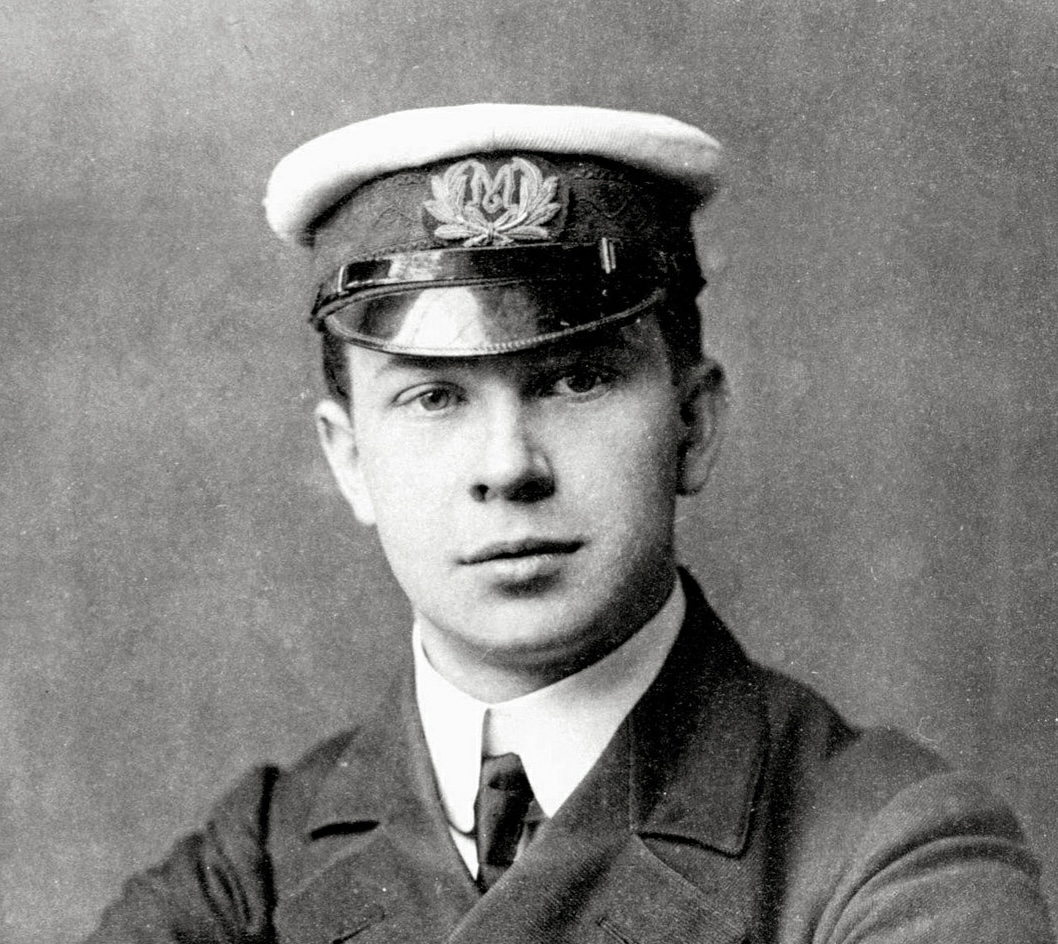
Junior operator Harold Bride sets the scene, skipping the back-story we all know and getting straight to the details of his gruelling round-the-clock role, the normality that’s about to be upended. He also introduces us to his colleague Jack Phillips, who at the grand old age of 24 is the more experienced of the pair. When the iceberg hits they’re professionally unconcerned, setting to work relaying the captain’s messages and speculating about repairs back in Belfast. But then the young Bride goes out on deck, and – in the first of many stand-out beats – returns with a face blank with horror.
The relationship between Phillips and Bride is the script’s emotional mainspring, and Stephen McParland and Daniel Drever excel in their respective roles. In this moment of extremity, Phillips is in charge, yet he looks out for Bride as an older brother might – until the poignant moment when, defeated, he accepts some care and comfort in return. The clawing realisation that help will come too late draws them ever closer, and for us in the audience deepens the sense of tension and dread. When the Olympic predicts her arrival time, we don’t need to hear them translate the Morse code; the expressions on their faces tell us all we need to know.
On the other side of the stage, but fifty miles away by sea, Harold Cottam hunches over another Morse key. He’s the radio operator on board the Carpathia, who famously was just minutes from turning off his set when the Titanic’s signal came through. Always present but crucially distant, actor Declan John Anthony captures the anguish of the helpless observer, offering what cheer he can to the doomed Titanic yet quietly shattered by the knowledge of what is to come. And when Phillips and Bride finally fade to silence, it falls to Anthony to tell the rest of the story, in an engrossing monologue that plunges us into the chaos and exhaustion of the rescue.
Writer and director Oliver Giggins should be proud of both his actors and his script. Perhaps he gets a little hung up on details of procedure, including the differing distress calls which give the show its name, and once or twice the sound – which on the whole is cleverly designed – overwhelms a line of dialogue. But his use of the simple space is elegant, dynamic and sometimes haunting, and he proves that truth needn’t be sacrificed in the name of narrative: some post-show fact-checking revealed how closely it’s grounded in historical sources. If you want Hollywood bombast, you know exactly where to find it. This is a drama built from character more than spectacle, and that restraint makes the signal carry all the further.

Comments