
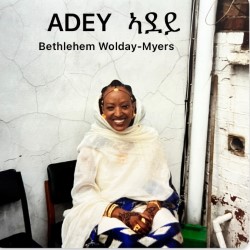
In Tigrinya, one of the languages of Eritrea, “Adey” means “mum”. Bethlehem Wolday-Myers’ mum moved from Eritrea to London decades ago, leaving behind a country torn by post-colonial violence to start a new life and new career. We learn a little about Eritrean culture as the show proceeds – from the best way to enjoy aromatic food to a noisy and liberating traditional dance – and through Wolday-Myers’ poems we also learn about Wood Green, the vibrantly mixed district near Tottenham where she grew up.
That poetry is natural and accessible, not beholden to strict metre but with satisfying cadence and drive. As Wolday-Myers addresses Queen Of West Green directly to her mother Tsehaynesh, we feel the weight of the sacrifices Tsehaynesh made as she built a home for her children. A justly angry poem about demands that she “assimilate” becomes an impassioned celebration of London’s communities; that theme’s further explored in North London Hymn, which works through what could have been a catalogue of stereotypes – the Turks are barbers, the Eritreans braid hair – to paint a warm image of unselfconscious diversity.
The show itself embraces a similar juxtaposition of styles. Though the poems form its core, we also see scenes from Wolday-Myers’ acting career, with the much-hated self-tape audition a recurring motif. Her calling as an actor is the second major theme, and highlights again a mother’s unconditional love: Tsehaynesh doesn’t quite understand why it’s so hard for her daughter to find work, but she’s there when she truly needs her to be. The show also features passages of physical theatre, which complement the poetry in the way a well-timed dance break gives music room to breathe.
But the risk is that this can feel like a miscellany. There is a clever through-line – we realise in the end that we’ve been seeing Wolday-Myers write the very show we’re attending – but the journey seems fragmented at times, less a single story than a collection of adjacent ones. The obvious solution is to simplify the narrative, but it might be more authentic to lean into its complexity, making the competing demands she faces as a poet, an actor and a daughter the fulcrum of the show.
The mingling of different identities is, after all, the heart of ADEY. And if the various themes don’t quite cohere, the most important one shines through: a loving mother’s generosity of spirit, and the understanding her daughter can gift her in return. The truths about identity which Wolday-Myers speaks can be challenging at times, but the ultimate message is one of belonging… and she extends an open-hearted welcome to all of us, too.

Comments