
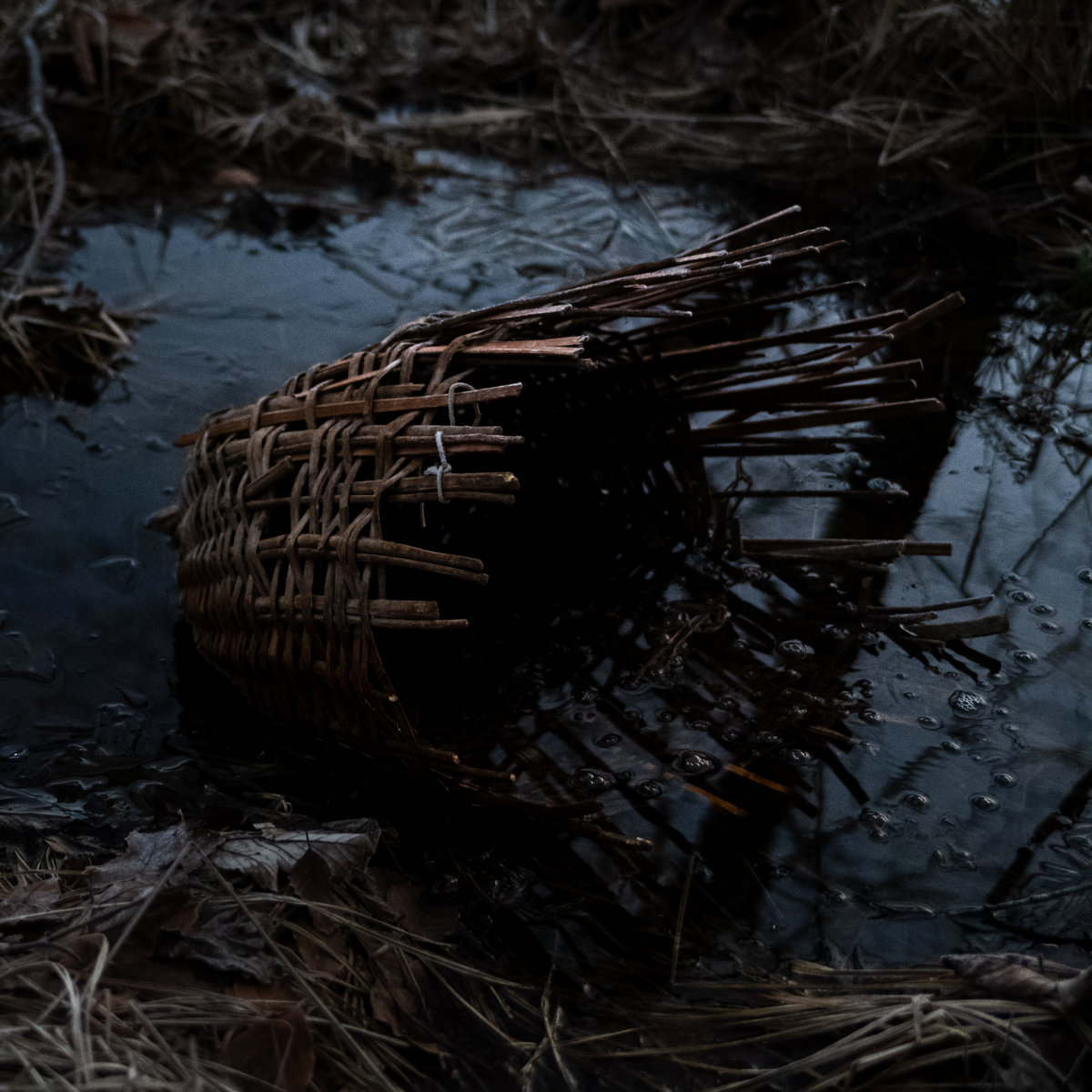
On his second album Massimo Silverio seeks to send a bit of peace and love into the world, to counteract the turbulence of our pressured lives and consider humanity’s place in the wider scheme of things.
Our entry into this world, ‘Sorgjâl’, is arguably the most challenging song on Surtùm. With a bedrock of downtempo, almost trip-hop beats we first hear Silverio’s whispered, breathy vocals a couple of minutes in. His lyrics are sung entirely in Carnic, a variation of the Friulian language of Italy’s northeastern Alps, so exactly what he’s saying is unknown (to me), but the song is cryptically subtitled as a ‘chant for this amputated world’ and the intensity builds along with bellowing tuba and raking cello, so we can assume it’s not particularly meditative.
After this ten minute epic, the album settles into a more relaxed groove, with softer, guitar-based ambient arrangements (‘Avenàl’) where Silverio pitches up an octave to try on some Thom Yorke warbling. ‘Zoja’ has a prominent woodblock and twisting, sinuous guitar lines, while ‘Vare’ has a nervous, hesitant energy offset by meandering guitar interjections.
Some of the album’s intensity is achieved via the alphorn, a sort of alpine didgeridoo traditionally used for calling cattle. It gives an absurdist edge to the otherwise solemn, minimalist ‘Prin’, but adds perfectly to the mournful atmosphere of ‘Ghirbe’ in unison with the tuba and Silverio’s wordless vocalising.
The spartan, yet intricate arrangements are the star of the show on Surtùm; the wistful strings of ‘Grim’ or the crackling found sound of ‘Vare’ adding as much to the eerie atmosphere as Silverio’s voice. He can be expressive beyond language (‘Avenàl’), and he’s always adding to the texture of the album, but it doesn’t quite reach the level of a Jónsi in the way Sigur Rós take music beyond language. But for a deliberate, deeply reflective album that takes each of its esoteric parts very seriously, there is a lot to enjoy here.
Comments