

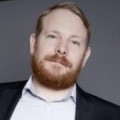
Sepideh Kaav is an Iranian stand-up comedian based in Berlin, whose work combines dark comedy, political satire, personal storytelling and sharp observations on identity, migration, family and power. At the University of Tehran, Sepideh was the editor-in-chief of a student periodical writing critical and sometimes funny articles about the news. She was also arrested by the morality police. Her comedy has been featured German television and she has performed her show ‘1979: Persianality Disorder’ around Europe, including sold-out previews, and is bringing the hour to Edinburgh Fringe 2026. We spoke to Sepideh about the show, how it’s changed since the war in Iran, and her hopes for August.
Can you tell us about ‘1979: Persianality Disorder’?
‘1979: Persianality Disorder’ is my solo show about being an Iranian woman and making it everyone else’s problem.
It’s personal, political, dark, and hopefully very funny. It’s about growing up with the weight of a country’s history in your body, then moving to Europe and realizing people have already decided what kind of person you’re supposed to be.
The title is partly a joke and partly the diagnosis.
For those who might be unfamiliar with you, how would you describe your comedy and your approach to performance?
I’d describe my comedy as dark, personal, political, and a little inappropriate in the places people expect you to be tasteful.
I’m interested in the overlap between pain, absurdity, and honesty. I don’t want to make difficult things neat or inspirational. I want to make them funny.
On stage, I’m not really trying to charm people into liking me. I’m more interested in inviting them into my way of thinking and seeing how far we can go together. Somehow, you’ll be charmed anyway.
How long have you working on ‘1979: Persianality Disorder’, and how have the events since February impacted the show?
I’ve been building this hour over the past four years. About a year ago I started performing it as a solo show, and it’s changed a lot since then. Both the 12-day war and the more recent escalations have affected the show in different ways. They have changed how audiences receive it, the kind of audiences who come to see it, and even how I feel about and frame my own story.
When your country is constantly being turned into a headline, your personal story doesn’t stay just personal. The show has become more urgent, but also more layered for me.
How do you feel about Iran as your homeland?
It’s my homeland. I don’t see myself as a separate unit from it, even though I’m physically separated from it. Every piece of Iran, good or bad, has shaped who I am, my sense of humour, and my worldview. I wish more peace and freedom for my people, but I would never claim this Iran isn’t my Iran.
It is complicated, painful, beautiful, infuriating, and still mine.
As an activist as well as a comedian, what is it like being a high-profile woman of colour in Europe given the current febrile climate?
I wouldn’t call myself an activist. I care about what I say on stage, and I do try to use humour to bring light to things that are often too dark to look at directly, but I’m still just a stand-up comedian.
One thing I’ve noticed as an Iranian woman comic is that people put you into the box of “survivor” the moment they learn where you’re from. And that doesn’t really sound like my voice. Or maybe I’m just not the kind of survivor they’re used to.
That can intrigue people, confuse them, and sometimes even upset them. But I choose to be myself. I am a real Iranian woman, not the image someone has built in their head.
Being from Iran has also made me very clear about who I am and what my comedic voice is. Moving to Europe and doing comedy here has been a big risk, and I’ve given up a lot to do it. So the freedom I have on stage means a lot to me. I want to use it honestly, even when that doesn’t fit neatly into what people expect from me.
What are your hopes for the show? What would constitute a successful Fringe for you?
I genuinely just hope people enjoy the show.
I feel like I’ve done my part, writing and refining a piece that I’m proud of. Now I want to put it in front of a Fringe comedy crowd and see what happens.
A successful Fringe for me would mean finding the right audience for the show, having strong rooms, and feeling like the work connected with people.
Is there anything you’re really looking forward to, or perhaps dreading, about the Fringe?
I’m nervous about being away from home for a month, and about the exhaustion, burnout, and the famous Fringe flu.
But I’m also really looking forward to performing the show for Fringe audiences, seeing other comics, watching their shows, and hopefully coming back inspired rather than destroyed.
Besides the show, can we expect to see you performing elsewhere during August; guest spots, compilation shows, etc?
Yes, absolutely. I’ll be doing as many guest spots as I can in the first half of the Fringe, since my show starts in the second half.
I already have a date booked at War of Flags, which I’m really looking forward to, since apparently we’re currently on a roll of winning wars.
Are there any other shows/ performers at the Fringe that you would recommend?
I’d recommend Sofia May’s ‘9/11 Birds and the Bees‘. She’s a good friend of mine, and she has a weird, interesting, and unique sense of humour that I truly enjoy.
‘1979: Persianality Disorder‘ is at Main Room at Laughing Horse at Coco Boho from Tue 18 to Sun 30 Aug 2026
Comments